
Thermal Curtains
- Thermal Insulated Curtains - 100% Blackout - Natural Linen Curtains for Winter Cold and Summer Heat Blocking
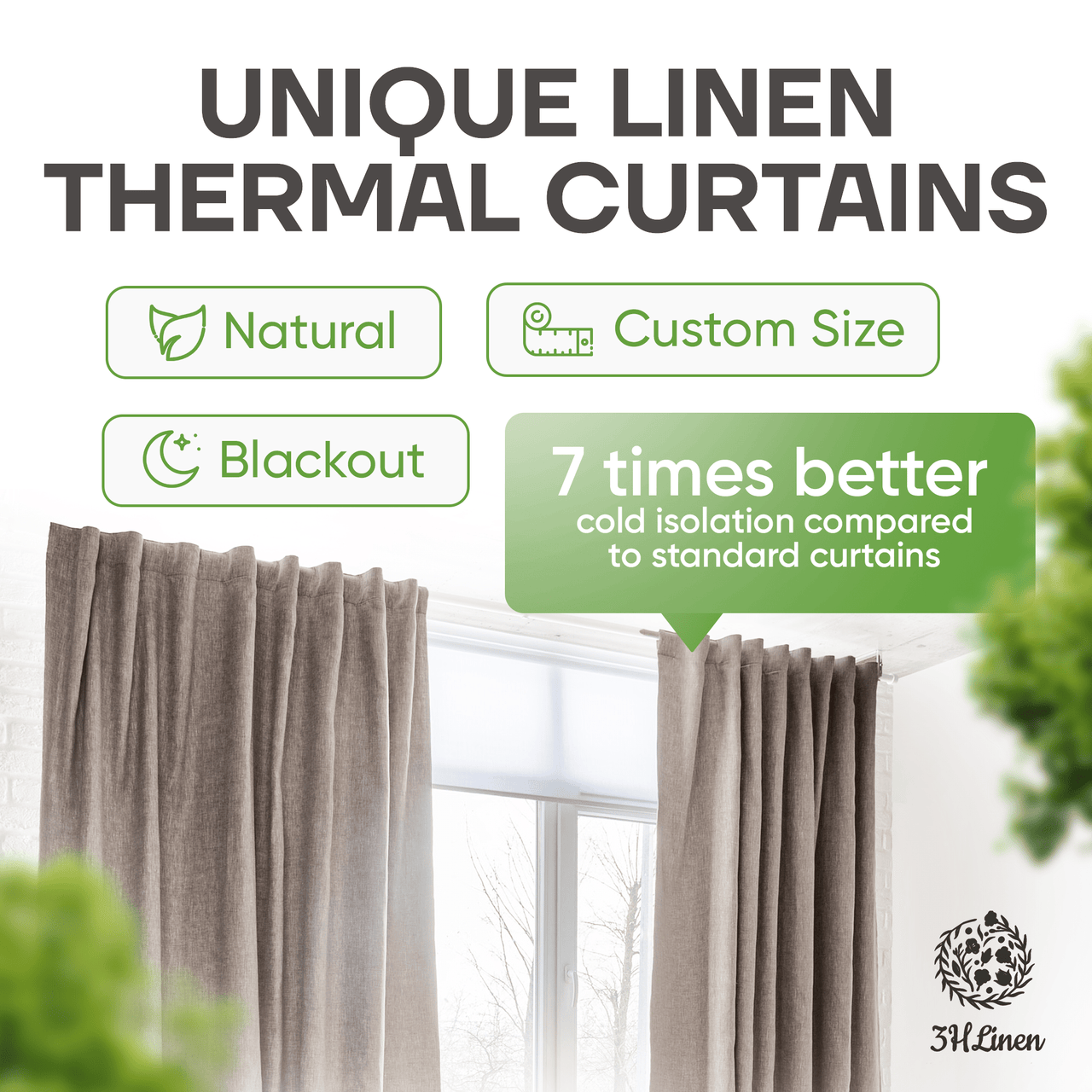
 Thermal Insulated Curtains - 100% Blackout - Natural Linen Curtains for Winter Cold and Summer Heat BlockingFrom $173.00From $173.00
$170.00 - Off-White Linen Thermal Curtains - Custom Headings - 100% Blackout & Soundproof Ivory Curtain Panel - Insulated Curtains That Keep Heat In

 Off-White Linen Thermal Curtains - Custom Headings - 100% Blackout & Soundproof Ivory Curtain Panel - Insulated Curtains That Keep Heat InFrom $173.00From $173.00
$170.00 - Black S-fold Thermal Insulated Curtain - Total Blackout Linen Curtain - Suitable for Rings and Hooks or Tracks - Natural Linen Insulated Curtains for Windows
 Black S-fold Thermal Insulated Curtain - Total Blackout Linen Curtain - Suitable for Rings and Hooks or Tracks - Natural Linen Insulated Curtains for WindowsFrom $173.00From $173.00
$170.00 - Thermal Insulated Drapes for Kids - 100 % Blackout Curtain for Kids Room - Insulated Curtain for Windows That Block Heat in Summer and Keep Cold Out in Winter
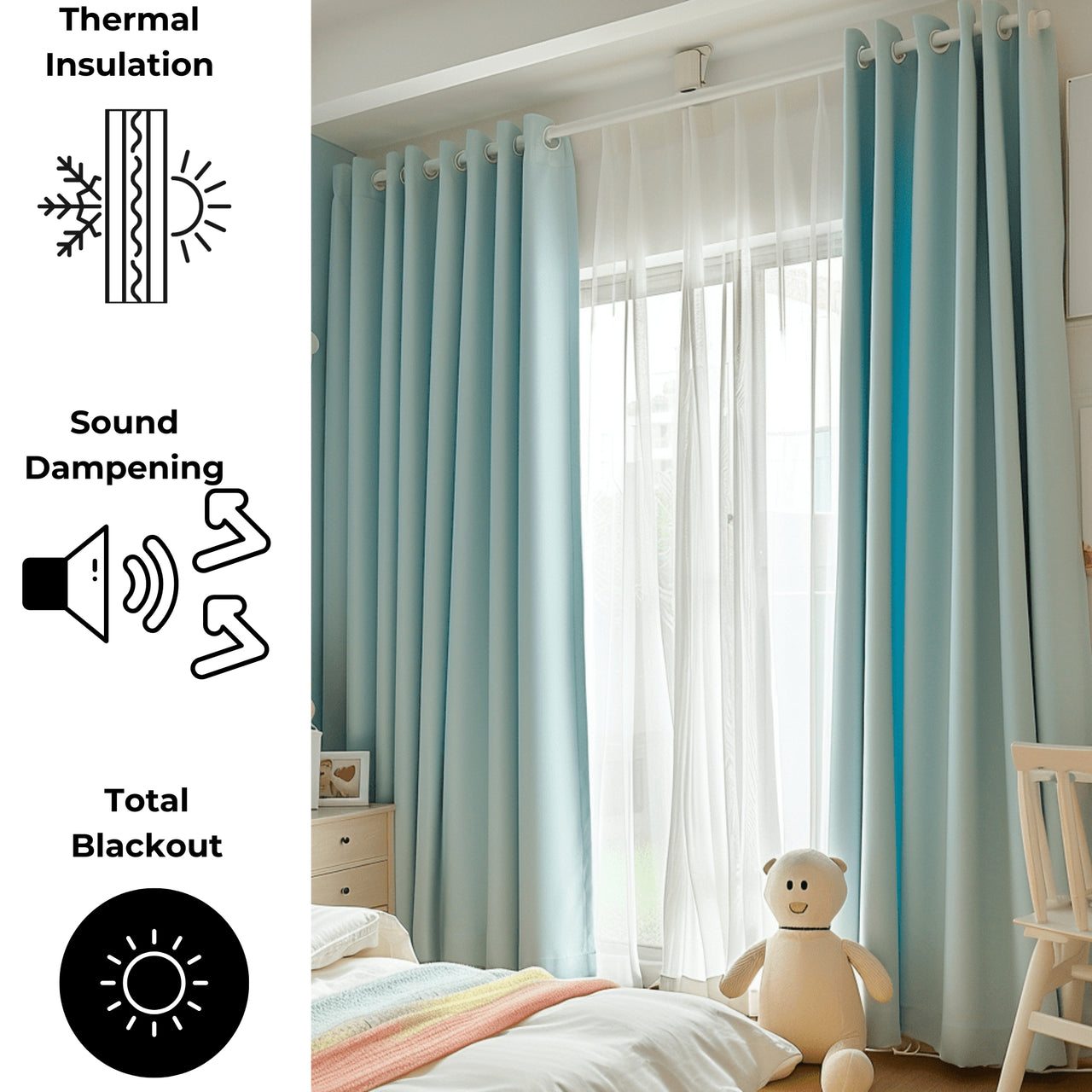
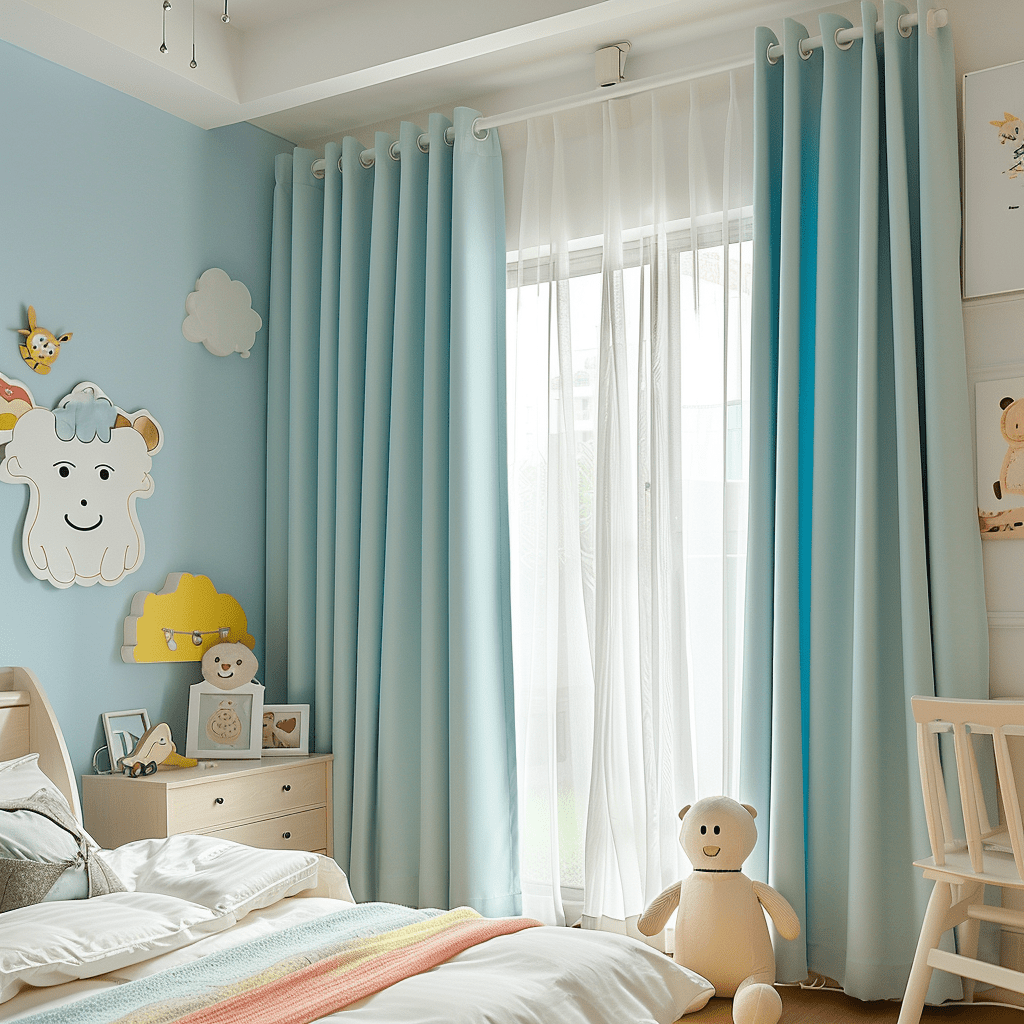 Thermal Insulated Drapes for Kids - 100 % Blackout Curtain for Kids Room - Insulated Curtain for Windows That Block Heat in Summer and Keep Cold Out in WinterFrom $173.00From $173.00
$170.00 - Ecru Heavy Weight Linen Thermal Curtains - Custom Headings - Insulated Blackout & Soundproof Draft Blocking Thick Curtain Panel - Thermal Insulated Drapes

 Ecru Heavy Weight Linen Thermal Curtains - Custom Headings - Insulated Blackout & Soundproof Draft Blocking Thick Curtain Panel - Thermal Insulated DrapesFrom $173.00From $173.00
$170.00 - Thermal Light Green Velvet Multitape Curtains – Heavy Thermal Insulated Velvet Curtain Panel

 Thermal Light Green Velvet Multitape Curtains – Heavy Thermal Insulated Velvet Curtain PanelFrom $165.00From $165.00
$162.50 - Thermal Mint Green Velvet Multitape Curtains – Heavy Thermal Insulated Velvet Curtain Panel

 Thermal Mint Green Velvet Multitape Curtains – Heavy Thermal Insulated Velvet Curtain PanelFrom $165.00From $165.00
$162.50 - Thermal Off-White Velvet Multitape Curtains – Heavy Thermal Insulated Velvet Curtain Panel

 Thermal Off-White Velvet Multitape Curtains – Heavy Thermal Insulated Velvet Curtain PanelFrom $165.00From $165.00
$162.50 - Off-White Heavy Weight Linen Thermal Curtains - Custom Headings - Insulated Curtains for Windows - 100% Blackout & Soundproof Ivory Curtain Panel for Winter & Summer

 Off-White Heavy Weight Linen Thermal Curtains - Custom Headings - Insulated Curtains for Windows - 100% Blackout & Soundproof Ivory Curtain Panel for Winter & SummerFrom $173.00From $173.00
$170.00 - Rod Pocket - Thermal Insulated - 100% Blackout Linen Reflective Curtains for Winter Cold and Summer Heat Blocking - Insulated Window Curtains
 Rod Pocket - Thermal Insulated - 100% Blackout Linen Reflective Curtains for Winter Cold and Summer Heat Blocking - Insulated Window CurtainsFrom $173.00From $173.00
$170.00 - Dusty Rose Linen Thermal Curtains - Custom Headings - Cold Blocking 100% Blackout & Soundproof Curtain Panel - Thermal Window Covers

 Dusty Rose Linen Thermal Curtains - Custom Headings - Cold Blocking 100% Blackout & Soundproof Curtain Panel - Thermal Window CoversFrom $173.00From $173.00
$170.00 - Terracotta Heavy Weight Linen Thermal Curtains - Custom Headings - Cooling 100% Blackout & Soundproof Curtain Panel for Summer & Winter

 Terracotta Heavy Weight Linen Thermal Curtains - Custom Headings - Cooling 100% Blackout & Soundproof Curtain Panel for Summer & WinterFrom $173.00From $173.00
$170.00 - Tawny Brown Linen Thermal Curtains - Custom Headings - Heavy Insulated 100% Blackout & Soundproof Curtain Panel for Winter & Summer

 Tawny Brown Linen Thermal Curtains - Custom Headings - Heavy Insulated 100% Blackout & Soundproof Curtain Panel for Winter & SummerFrom $173.00From $173.00
$170.00 - Mustard Yellow Linen Thermal Curtains - Custom Headings - Energy Efficient Insulating 100% Blackout & Soundproof Curtain Panel

 Mustard Yellow Linen Thermal Curtains - Custom Headings - Energy Efficient Insulating 100% Blackout & Soundproof Curtain PanelFrom $173.00From $173.00
$170.00 - Thermal Teal Velvet Multitape Curtains – Heavy Thermal Insulated Velvet Curtain Panel

 Thermal Teal Velvet Multitape Curtains – Heavy Thermal Insulated Velvet Curtain PanelFrom $165.00From $165.00
$162.50 - Aquamarine Linen Thermal Curtains - Custom Headings - Curtains to Keep Heat In - 100% Blackout & Soundproof Light Blue Curtain Panel

 Aquamarine Linen Thermal Curtains - Custom Headings - Curtains to Keep Heat In - 100% Blackout & Soundproof Light Blue Curtain PanelFrom $173.00From $173.00
$170.00 - Thermal S-fold Patio Sliding Glass Door Velvet Curtain - Total Blackout - Suitable for Rings and Hooks or Tracks - Custom Width, Length and Colors

 Thermal S-fold Patio Sliding Glass Door Velvet Curtain - Total Blackout - Suitable for Rings and Hooks or Tracks - Custom Width, Length and ColorsFrom $165.00From $165.00
$162.50 - Sky Blue Linen Thermal Curtains - Custom Headings - 100% Blackout & Soundproof Light Blue Summer Curtain Panel

 Sky Blue Linen Thermal Curtains - Custom Headings - 100% Blackout & Soundproof Light Blue Summer Curtain PanelFrom $173.00From $173.00
$170.00 - Asparagus Green Linen Thermal Curtains - Custom Headings - 100% Blackout & Soundproof Curtain Panel for Winter & Summer

 Asparagus Green Linen Thermal Curtains - Custom Headings - 100% Blackout & Soundproof Curtain Panel for Winter & SummerFrom $173.00From $173.00
$170.00 - Olive Green Linen Thermal Curtains - Custom Headings - Thermal Drapes for Living Room & Bedroom - 100% Blackout & Soundproof Curtain Panel

 Olive Green Linen Thermal Curtains - Custom Headings - Thermal Drapes for Living Room & Bedroom - 100% Blackout & Soundproof Curtain PanelFrom $173.00From $173.00
$170.00 - Dusty Pink Linen Thermal Curtains - Custom Headings - Insulated Draft Blocking 100% Blackout & Soundproof Curtain Panel for Winter & Summer

 Dusty Pink Linen Thermal Curtains - Custom Headings - Insulated Draft Blocking 100% Blackout & Soundproof Curtain Panel for Winter & SummerFrom $173.00From $173.00
$170.00 - Thermal Pink Velvet Multitape Curtains – Heavy Thermal Insulated Velvet Curtain Panel

 Thermal Pink Velvet Multitape Curtains – Heavy Thermal Insulated Velvet Curtain PanelFrom $165.00From $165.00
$162.50 - Moss Green Linen Thermal Curtains - Custom Headings - Insulated 100% Blackout & Soundproof Curtain Panel for Winter & Summer

 Moss Green Linen Thermal Curtains - Custom Headings - Insulated 100% Blackout & Soundproof Curtain Panel for Winter & SummerFrom $173.00From $173.00
$170.00 - Green S-fold Thermal Insulated - Total Blackout Linen Curtain - Custom Width and Length - Suitable for Rings and Hooks or Tracks

 Green S-fold Thermal Insulated - Total Blackout Linen Curtain - Custom Width and Length - Suitable for Rings and Hooks or TracksFrom $173.00From $173.00
$170.00 - Forest Green Linen Thermal Curtains - Custom Headings - Cold Blocking Insulated 100% Blackout & Soundproof Dark Green Curtain Panel

 Forest Green Linen Thermal Curtains - Custom Headings - Cold Blocking Insulated 100% Blackout & Soundproof Dark Green Curtain PanelFrom $173.00From $173.00
$170.00 - Grommets Top Thermal Insulated 100% Blackout Linen Curtains for Winter Сold and Summer Heat Blocking
 Grommets Top Thermal Insulated 100% Blackout Linen Curtains for Winter Сold and Summer Heat BlockingFrom $173.00From $173.00
$170.00 - S-fold Thermal Insulated Curtains - 100% Blackout - Linen Energy Efficient Curtains for Winter to Keep Cold Out and Summer to Keep Heat Out

 S-fold Thermal Insulated Curtains - 100% Blackout - Linen Energy Efficient Curtains for Winter to Keep Cold Out and Summer to Keep Heat OutFrom $173.00From $173.00
$170.00 - Burnt Orange Linen Thermal Curtains - Custom Headings - 100% Blackout & Soundproof Summer Curtain Panel for Summer & Winter

 Burnt Orange Linen Thermal Curtains - Custom Headings - 100% Blackout & Soundproof Summer Curtain Panel for Summer & WinterFrom $173.00From $173.00
$170.00 - Grey Tab Top Thermal Insulated Total Blackout Linen Curtain - Custom Width and Length
 Grey Tab Top Thermal Insulated Total Blackout Linen Curtain - Custom Width and LengthFrom $173.00From $173.00
$170.00 - Thermal S-fold Patio Sliding Glass Door Linen Curtain - Total Blackout - Suitable for Rings and Hooks or Tracks - Custom Width, Length and Colors

 Thermal S-fold Patio Sliding Glass Door Linen Curtain - Total Blackout - Suitable for Rings and Hooks or Tracks - Custom Width, Length and ColorsFrom $173.00From $173.00
$170.00 - Black Tab Top Thermal Insulated Curtain - Total Blackout Linen Curtain - Summer Cooling Curtains to Block Out Sun and Heat

 Black Tab Top Thermal Insulated Curtain - Total Blackout Linen Curtain - Summer Cooling Curtains to Block Out Sun and HeatFrom $173.00From $173.00
$170.00 - Thermal Patio Sliding Glass Door Velvet Curtain - Total Blackout - With Back Tabs - Custom Width, Length, and Colors - Patio Curtains for Winter and Summer

 Thermal Patio Sliding Glass Door Velvet Curtain - Total Blackout - With Back Tabs - Custom Width, Length, and Colors - Patio Curtains for Winter and SummerFrom $165.00From $165.00
$162.50 - Thermal Patio Sliding Door Linen Curtain - 100% Total Blackout - With Back Tabs - Custom Width, Length and Colors

 Thermal Patio Sliding Door Linen Curtain - 100% Total Blackout - With Back Tabs - Custom Width, Length and ColorsFrom $173.00From $173.00
$170.00 - Blue S-fold Thermal Insulated Curtain - Total Blackout Linen Custom Curtain - Suitable for Rings and Hooks or Tracks - Insulated Curtain to Keep Cold Out
 Blue S-fold Thermal Insulated Curtain - Total Blackout Linen Custom Curtain - Suitable for Rings and Hooks or Tracks - Insulated Curtain to Keep Cold OutFrom $173.00From $173.00
$170.00 - Black Rod Pocket Thermal Curtain - Natural Linen Curtain With Thermal Lining - Energy Efficient Curtain With Heat Blocking Characteristics to Block Out Sun and Heat
 Black Rod Pocket Thermal Curtain - Natural Linen Curtain With Thermal Lining - Energy Efficient Curtain With Heat Blocking Characteristics to Block Out Sun and HeatFrom $173.00From $173.00
$170.00 - Green Thermal Insulated Total Blackout Grommet Linen Curtain - Custom Width and Length - Curtains to Keep Heat Out for Summer

 Green Thermal Insulated Total Blackout Grommet Linen Curtain - Custom Width and Length - Curtains to Keep Heat Out for SummerFrom $173.00From $173.00
$170.00 - Black Thermal Solar Reflective Curtains - 100% Blackout Grommet Linen Curtain - Insulating Window Curtains to Keep Heat and Cold Out
 Black Thermal Solar Reflective Curtains - 100% Blackout Grommet Linen Curtain - Insulating Window Curtains to Keep Heat and Cold OutFrom $173.00From $173.00
$170.00 - Green Tab Top Thermal Insulated - 100% Blackout Linen Curtain - Custom Width and Length - Energy Efficient Curtains for Windows
 Green Tab Top Thermal Insulated - 100% Blackout Linen Curtain - Custom Width and Length - Energy Efficient Curtains for WindowsFrom $173.00From $173.00
$170.00 - Grey Thermal Curtain - 100% Total Blackout Linen Curtain With Back Tabs - Custom Width and Length - Insulated Curtains for Windows

 Grey Thermal Curtain - 100% Total Blackout Linen Curtain With Back Tabs - Custom Width and Length - Insulated Curtains for WindowsFrom $173.00From $173.00
$170.00 - Green Rod Pocket Curtain - Thermal Insulated Total Blackout Linen Curtain - Custom Width and Length - Thermal Reflective Curtains

 Green Rod Pocket Curtain - Thermal Insulated Total Blackout Linen Curtain - Custom Width and Length - Thermal Reflective CurtainsFrom $173.00From $173.00
$170.00 - Grey Thermal Insulated Total Blackout Grommet Linen Curtain - Custom Width and Length - Reflective Curtain to Keep Cold Out
 Grey Thermal Insulated Total Blackout Grommet Linen Curtain - Custom Width and Length - Reflective Curtain to Keep Cold OutFrom $173.00From $173.00
$170.00 - Grey S-fold Thermal Insulated - 100% Blackout Linen Curtain - Custom Energy Efficient Curtains - Suitable for Rings and Hooks or Tracks

 Grey S-fold Thermal Insulated - 100% Blackout Linen Curtain - Custom Energy Efficient Curtains - Suitable for Rings and Hooks or TracksFrom $173.00From $173.00
$170.00 - Light Blue Rod Pocket Thermal Curtain - 100% Blackout Linen Curtain - Custom Insulated Window Curtain
 Light Blue Rod Pocket Thermal Curtain - 100% Blackout Linen Curtain - Custom Insulated Window CurtainFrom $173.00From $173.00
$170.00 - Black Solar Reflective Curtain - 100% Total Blackout Linen Curtain - Cooling Curtains With Back Tabs - Black Blackout Thermal Curtains for Windows
 Black Solar Reflective Curtain - 100% Total Blackout Linen Curtain - Cooling Curtains With Back Tabs - Black Blackout Thermal Curtains for WindowsFrom $173.00From $173.00
$170.00 - Green Thermal Curtain - 100% Blackout Linen Curtain With Back Tabs - Custom Width and Length - Natural Linen Insulated Curtains for Windows

 Green Thermal Curtain - 100% Blackout Linen Curtain With Back Tabs - Custom Width and Length - Natural Linen Insulated Curtains for WindowsFrom $172.00From $172.00
$168.75 - Grey Rod Pocket Thermal Insulated - Total Blackout Linen Curtain - Custom Width and Length - Curtains That Reflect Heat and Block Out Heat

 Grey Rod Pocket Thermal Insulated - Total Blackout Linen Curtain - Custom Width and Length - Curtains That Reflect Heat and Block Out HeatFrom $173.00From $173.00
$170.00 - Blue Thermal Insulated Curtain - 100% Blackout Linen Curtain With Back Tabs - Custom Width and Length - Heat & Cold Resistant Curtains

 Blue Thermal Insulated Curtain - 100% Blackout Linen Curtain With Back Tabs - Custom Width and Length - Heat & Cold Resistant CurtainsFrom $173.00From $173.00
$170.00 - Dark Blue Thermal Curtain Insulated Total Blackout Grommet Linen Curtain - Custom Width and Length - Heat Reflective Blackout Curtains

 Dark Blue Thermal Curtain Insulated Total Blackout Grommet Linen Curtain - Custom Width and Length - Heat Reflective Blackout CurtainsFrom $173.00From $173.00
$170.00


Frequently Asked Questions
What Makes Your Linen and Velvet Curtains Thermal?
The secret is in their two layers and thermal lining. Multiple layers help reduce heat transfer through the glass and maintain your desired indoor temperature.
What Materials Are Used for the Thermal Layers?
Our curtain lining is made from 100% polyester, constructed in such a way as to give the final product as much temperature regulation as possible.
Can I Get Samples of Different Colors of Your Thermal Curtains?
Yes! Simply click this link: http://3hlinen.com/collections/fabric-samples
How Much Does Each Thermal Curtain Panel Weigh?
It depends on the size and the type of curtain chosen. For a curtain panel that’s 49” x 90”, a mediumweight linen panel will weigh 3.70 lbs, a heavyweight linen panel will weigh 4.51 lbs, and a velvet panel will weigh 4.65 lbs.
Does the Heading Type Have an Impact on Thermal Insulation Properties?
It can, especially if there’s more space between your rod/track and the panel. The best heading types are rod pocket or pinch and pencil pleat track curtains, while wave folded, back tab, eyelets, and tab tops may let in more hot or cold air.
How to Measure for Thermal Insulated Curtains?
Thermal curtains are measured the same way as any other type of curtain home decor. Measure the curtain rod, then multiply its width by 1.5 to 2 for complete fullness. Then, measure from where you want to place the rod to about an inch from the floor.
How Do I Care for Thermal Insulated Curtains?
Our curtains are dry clean-only. If you want to keep your curtains looking their best and keep their thermal performance at its peak, take them to a professional dry cleaner.
Can Thermal Curtain Window Treatments Help Keep My Room Cooler in Summer?
Yes! Sunlight entering through uncovered windows can heat up your home, making your AC work harder. Thermal curtains can prevent the light from entering, and also keep cool air from escaping through the windows.
What’s the Difference Between Thermal Curtains and Blackout (Light Blocking) Curtains?
All of our thermal curtains are blackout, but not all blackout curtains are thermal. Regular blackout or light-filtering curtains will reduce sunlight entering through your window, but not dampen sound or regulate your home temperature. Thermal curtains provide 100% blackout, full temperature regulation, and soundproofing.
Can Thermal Curtains Lower Heating and Cooling Costs and Make My Home More Energy Efficient?
Yes! During summer, thermal curtains can keep the sunlight out of your home and prevent cool air from escaping through the windows. In the winter, opening the curtains during the daytime will let in natural sunlight, then closing them at night will prevent warm air from leaving through the windows.
What Curtain Size and Coverage Provide the Best Insulation?
It ultimately depends on your window frame’s size. We generally recommend your curtains be 4-6 inches above your window frame, and extend 4-12 inches past each window side. The curtains should also be near the floor. Measure your window frame and then determine what the best size of thermal curtains will be for your situation. Ideally, they should cover the entire area and prevent any light from seeping in when closed.
Where Can I Use Thermal Curtains?
Thermal curtains work well for any room in your everyday life that needs cooling or heating, or any room where you need to block light. Bedroom curtains can reduce sunlight if you sleep in. Living room curtains can keep glare off the TV. Bathroom curtains can add privacy.
Do Thermal Curtains Also Help Reduce Outside Noise?
Yes! Our thermal lining is also soundproof. Soundproof curtains won’t block 100% of noise, but they can reduce higher-pitched frequencies. If you want to soundproof your room further, placing thick furniture or shelves by noisy areas can help as well.
Can Curtains Help With a Draughty Doorway?
Yes! Curtains can trap any cold air that can seep through the edges of the door, and also save you money. You don’t need to replace your door to keep your room warm. Just close the curtains whenever you want to keep your room warm.
Does the Stated Width Refer to One Panel or Both Together?
The width of our window treatments refers to one panel, not two. We sell each panel separately, so keep that in mind if you have a certain width you want to achieve with your light blocking curtains.
Do You Sell Curtains in Pairs or as Single Panels?
Our thermal curtains and other window coverings are sold as single panels. If you need a second room darkening curtain, simply purchase another panel in the same size or type.
Will Thermal Insulated Curtains Work With My Rod, Track, Rings, or Hooks?
Yes! However, it can depend on what type of curtain you choose. A curtain rod can work well with thermal curtains with hidden back tabs or rod pockets. A track works well for drapes with an S-fold and multi-tape headings. S-fold and pleated curtains will also work well with rings and hooks. Contact us if you’re unsure if your hardware will work with our thermal privacy curtains.
Can Thermal Curtains in the Room With My Thermostat Affect Temperatures Elsewhere in the House?
It is possible. For example, if there’s an insulating layer of curtain over your window during the day, it can keep the room with the thermostat cooler. If it’s a cold day, the thermostat can give a lower temperature reading, making the heater work harder. Not only can this affect the energy efficiency of your home, but it can make other rooms hotter. The solution is for you to move the thermostat, if possible, or to open and shut the curtains according to the desired temperature of your home.
Are Thermal Curtains Still Useful if I Have Double Glazing or Underfloor Heating?
Yes, as windows can still cause warm air to leave your home. For double glazing, thermal curtains can add an extra insulation layer and prevent any cold downdrafts, which can lead to heat loss. Thermal curtains also work well with underfloor heating, helping prevent heat from escaping through the windows. Good winter curtains can keep the cold air from entering and vice versa, reducing your energy bills.
Should I Close Thermal Curtains All Day in Winter, or Let the Sunshine In?
While it depends on the climate and personal preference, generally people will open the thermal curtains during the day, then close them at night. This is especially true on a sunny day, when the sun can keep your home warm. Closing the curtains at night can then help retain the heat. This is an energy-efficient way to keep your home warm without skyrocketing your energy costs.